



It is no secret that Bayreuth lies in the heart of Beer Franconia. Since time immemorial, our city has been a centre of the brewer's art, and it still produces great beers today.
Table of contents
Experiencing beer in Bayreuth
Maisel’s Beer Experience World
The great highlight of Bayreuth as a beer city is Maisel’s Bier-Erlebnis-Welt (Beer Experience World). Set in the historic headquarters of the Gebr. Maisel brewery, the Beer Experience World offers an insight into the craft of Franconian brewing and the special features of Upper Franconia as a region of beer and fine food, across more than 4,500 square metres. It combines the tradition of Franconian beer culture with state-of-the-art technology, historic buildings with a modern ambience, and engaging information with a wide variety of beer to enjoy.
In the Maisel&Friends brewing workshop, visitors can experience the craft brewing process at close quarters, while Maisel’s Brewery Museum gives an excellent impression of the history of Franconian brewing culture. Entered in the Guinness Book of Records in 1988 as the most comprehensive beer museum, the museum in the 19th-century brewery building houses not only the original equipment and brewing kettles but also more than 5,500 beer glasses and beer mugs and a collection of 400 rare enamel signs from a wide range of breweries and beer brands.
In the adjoining restaurant Liebesbier, guests sit right in the middle of the craft beer experience brewery, where numerous beer specialities bear witness to an innovative Franconian pioneering spirit. There are 21 beers on tap and more than 100 bottled beers to sample.


Bayreuth Catacombs
The Bayreuth Catacombs are still a reminder today of the long history of the underground passages. Originally dug for mining ore, the passages were also frequently used as air-raid shelters and refuge bunkers for the public during the Second World War. Towards the end of the 19th century, the tunnels were discovered to be the ideal place for storing beer. The constantly cool temperatures created the perfect climate for the first-class beers of Bayreuth’s breweries.
Today, you can still visit this underground realm on a guided tour. For 60 minutes you can explore the sandstone labyrinth at length, while the tour guide accompanies the little journey with fascinating background information.
Beer tastings
You can gain further impressions of the “healing” effect of Bayreuth beer at the many beer tastings offered by Bayreuth’s breweries: besides Maisel’s Beer Experience World, which offers a wealth of different beer tastings, there is also a joint brew by the BräuBrüder every month – a collaboration between Mann’s Bräu and Becher Bräu. International beer styles are brewed and given a Franconian interpretation. This way you can get to know and appreciate Bayreuth’s beer delights right where they are made.
Maisel’s Bier-Erlebnis-Welt
Andreas-Maisel-Weg 1
95445 Bayreuth
Phone: +49 921 401-234
erleben@maiselandfriends.com
maiselandfriends.com
Historical ambassadors of Bayreuth beer
The best ambassador for Bayreuth beer was undoubtedly the great poet Jean Paul, but numerous sources show that Richard Wagner, too, knew how to appreciate good Bayreuth beer. In which inns did they spend their evenings, and what did they like to drink most?
Richard Wagner
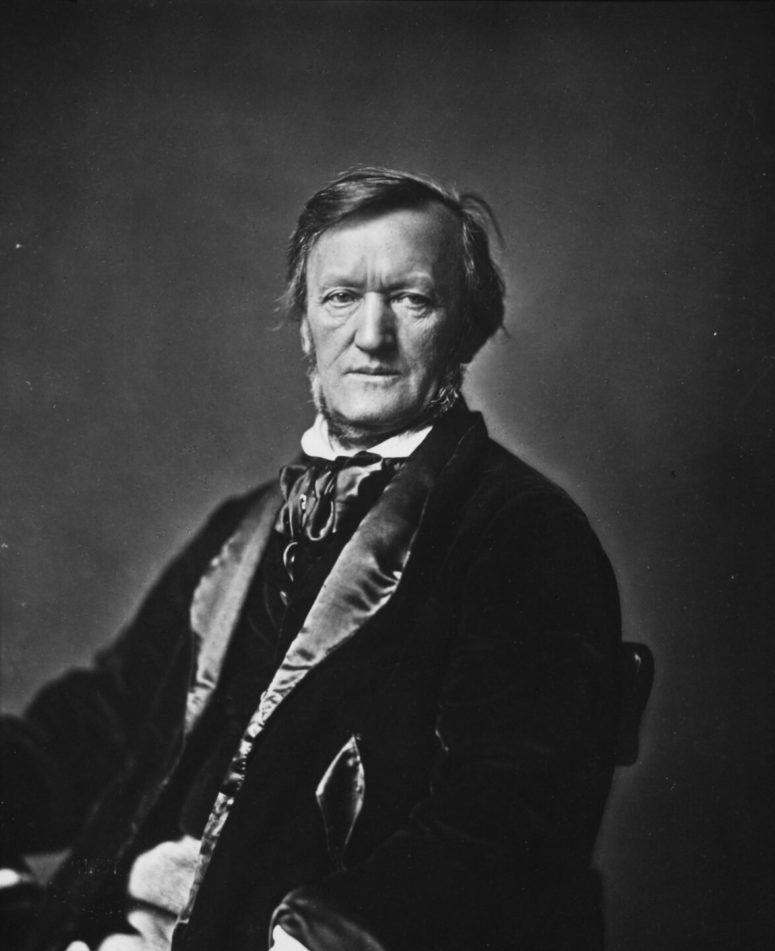
Richard Wagner was a great connoisseur of the good things in life. In her diaries, his wife Cosima often spoke of her husband’s “dietary lapses”. Beer in particular had captured his heart. He was a regular at the Angermann inn. After his walks with his dog Russ, he would often come into the taproom, sit down at the so-called Kutschertischchen (coachmen’s table), smoke a cigar and drink a glass of beer – usually slowly and in silence. As a rule, he declined invitations to join other tables. He liked to eat a hearty Brotzeit (cold snack) with his beer, for which he had his own ivory-handled cutlery and two plates. He also drank only from his own personal glass. The tradition of regulars’ own glasses and tankards still lives on in some inns today.

Jean Paul
“I am remarkably healthy. Thanks to Bayreuth beer…” So said Jean Paul, who now and then had his friend Osmund send him a small cask from Bayreuth to Weimar and Meiningen.
The thought of moving to Bayreuth filled him with great joy: “But once I am in Bayreuth – heavens, how I shall drink!”
After moving to Bayreuth he said: “Thank God that you – like me – live not in Saxony or the Saxon Vogtland, but in Bayreuth, closest to the best beer – the champagne beer.” The city had just one drawback for him: so many Bayreuthers lived there …
Places of beer, past and present
There are many places in Bayreuth where you can encounter the subject of “beer” – be it on a brewery tour at Maisel’s Beer Experience World or at Becher Bräu, on a tour of discovery through the Bayreuth Catacombs, or simply while enjoying a Seidla (half-litre) of beer, a beer roast or a sweet treat such as beer ice cream or a beer praline.
First of all, a few general words on brewing in Bayreuth: since brewing in Bayreuth was not a guild trade, every full citizen of the town was allowed to brew his own house beer once a year in the municipal brewhouse – under the supervision of the municipal master brewer, of course. Over time, the bakers came to specialise in this sideline. At the beginning of the 20th century, a “Beck” (baker) brewed around five to six hectolitres a year, which was served in the taproom, known as the Zechstube.
Mann’s Bräu in Friedrichstraße – the tradition of the baker-brewers
One of the baker families mentioned above was the Mann family in Friedrichstraße. From 1823 onwards they brewed so-called Schenkbier (draught beer) and lager. Their Doppelbock was legendary – and it still exists today, though it is now brewed by Becher Bräu in the Altstadt. No brewing took place from May to September, as the beer could not be kept cool during those months. From 1911, the Mann family devoted themselves solely to brewing, having given up the baker’s trade.
Right next door, a Buschenschenke (seasonal tavern) has opened again today: Bäckerei Lang has revived the old tradition and brews its own beer four times a year. The family has held the right to fire a baking oven for more than 250 years; brewing equipment was first mentioned at the end of the 18th century, and from the beginning of the 19th century a beer tavern was run here.


Becher Bräu in the Altstadt
Becher Bräu in the Altstadt is now run by the third generation. Here, visitors can look forward to traditionally good beer, brewed in the new brewhouse according to the Bavarian Purity Law. The brewery inn invites you to linger with its tradition and Franconian cosiness. On a brewery tour you will see the bottling plant, the storage cellar and the fermentation cellar. The brewhouse in its glass extension opens directly onto the taproom, so you can smell the brewing vapours while the brew is under way. Events take place regularly in the adjoining Bechersaal – from jazz concerts to cabaret, there is plenty on offer.
The Bauernwärtla in Sophienstraße
Another well-known baker-brewer was Georg Bauer, who ran the “Bauernwärtla” in Sophienstraße. The “Wärtla” (a diminutive of Wirt, landlord) opened his inn at the beginning of the 20th century, and it soon became very popular. His taproom earned the nickname “Laboratorium” (laboratory) because the landlord carried out all kinds of experiments with beer. Many a cloudy “Brieh” (brew) was disguised with a dark colouring agent, and for some guests he mixed a highly individual drink from a variety of different casks.
His jokes and sayings were also widely known. To a brash Prussian who asked for a “small blond one”, he is said to have teased:
“Now you just wait till you’re thirstier, and then you’ll drink a big one.”
Georg Bauer
This Bayreuth character also had a soft spot for young people, and many a grammar-school pupil ended up with a sore head for next to nothing. Even at the age of 90, Georg Bauer was still a cheerful beer drinker. The “Bauernwärtla” is still open today and is now home to an Italian restaurant.
The Old Town Hall
The Old Town Hall was built as a private palace in the first half of the 17th century and bought in 1721 by the wealthy hospital foundation, as the town had no money. It served as the town hall until 1917 and then again from 1945 to 1972. In 1995 the building passed into municipal ownership. After being used as police headquarters, it was converted into the Kunstmuseum (Museum of Art) with an inn on the ground floor. An inn of this kind is said to have existed when the building first came into use, but that Ratskeller only lasted a few years.


The Angermann
In Wagner’s day, the Angermann was an institution. After rehearsals for the Festival, the artists and musicians would gather there, and the nights at the inn were often just as long as the Festival rehearsals. The artists even nicknamed the Angermann “the catacombs”: a long corridor led to extremely modest, cramped and low-ceilinged guest rooms, and on the first floor there was a hall that was just as unglamorous. Guests sat on simple long wooden benches at wooden tables, and Weihenstephaner beer was served.
For visitors to the Bayreuth Festival, the Angermann became an attraction in its own right. At times the crowds during the Festival were so large that guests not only filled the rooms and the forecourt but also, litre tankards in hand, the entire pavement and the street right up to the houses opposite (as observed by the photographer Hans Bertolo Brand).
Other notable buildings in Maximilianstraße
You will come across the subject of beer in many other places too – be it on a guided city tour or on a visit to one of Bayreuth’s many Franconian inns. In addition, there are further places of culinary delight in Bayreuth just waiting to be discovered. The association Bierland Oberfranken has also compiled plenty of useful information on beer and an extensive list of breweries in the region.
- Maximilianstraße 69 – here you will find the Bayreuth Bierliesl on the façade. The girl – holding beer mugs and dancing lightly on one leg – serves as a reminder of “moderation”.
- Maximilianstraße 63 – Gaststätte Porsch – a former baker-brewery
- Maximilianstraße 56 – Brauereischänke am Markt – this was the site of the communal brewhouse
- Maximilianstraße 30 – formerly the baker-brewery of Georg Reuschel
Sources: Mayer Bernd, Bayreuth G´schichtla, and Rückel Gert and Kolb Werner, Stadtführer Bayreuth
Suggestions for beer hikes
Bayreuth and beer – hikes on which you not only explore the city’s rich brewing tradition but also enjoy the picturesque nature and idyllic countryside of the district of Bayreuth.


